
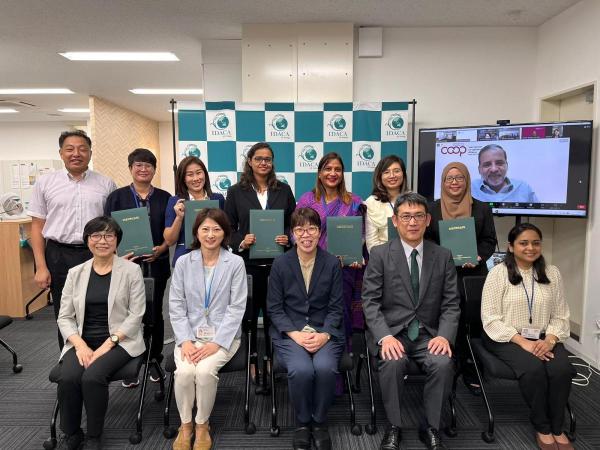
The 1st ICA-MAFF (Japan) Training Course on Capacity Building of Rural Women on Their Roles for Vitalization of Rural Economy in FY-2023 was held in Thailand and Japan from 22 August to 14 September 2023. It is funded by the Ministry of Agriculture, Forestry and Fisheries (MAFF), Government of Japan and implemented by the ICA. Seven trainees from seven countries India, Kiribati, Malaysia, Nepal, Lao PDR, Thailand and Vietnam participated in the course.
Before the course began, the participants were given home country assignments (HCAs) to watch learning videos prepared by IDACA and prepare their job reports. Part I of the training course was organised in collaboration with the Cooperative League of Thailand (CLT) in Bangkok, Thailand from 22 to 31 August. The opening ceremony, held at CLT, was attended by the representatives of MAFF, the Institute for the Development of Agricultural Cooperation in Asia (IDACA), CLT and ICA-AP.
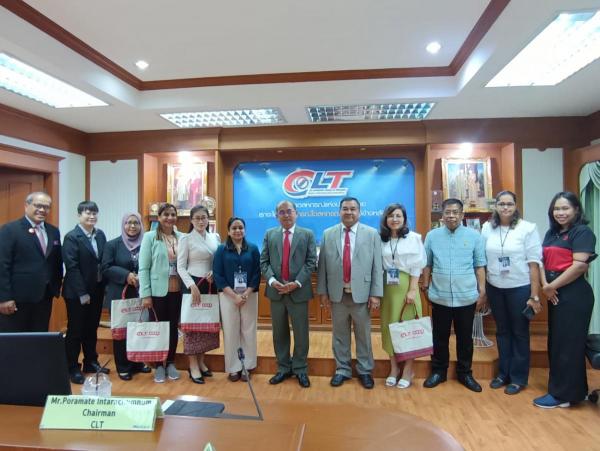
CLT Chairman Mr. Poramate Intarachumnum welcomed the participants and wished them a successful training. Part I covered learning visits to cooperatives and observation of activities conducted for and by rural women. The participants learnt about the cooperative movement in Thailand and the auditing processes for cooperatives implemented by the Cooperative Auditing Department. Field visits were organised to the Khampaeng Sean Dairy Cooperative, Khampaeng Sean Cattle and Beef Cooperative, Tung Kru Livestock Farmers Cooperative Group, Credit Union League of Thailand (CULT), Thai Sea Salt Petchaburi Province Agricultural Cooperative Ltd., Petchaburi Teacher’ Saving and Credit Cooperative Ltd., Nong Kha Nang Credit Union Cooperative Ltd., and Ban Lard Agricultural Cooperative Ltd. The participants learnt about the importance of high-quality hygiene and safety standards that are incorporated by large cooperatives operating in the food and beverage industry which enable them to successfully compete in the market and maintain their name and cooperative brand image. They observed how different local communities live together in harmony and collaborate for a joint economic and social future. During the interaction with CULT, participants observed that people have high trust in credit unions, more than commercial banks in rural areas, and this contributes to the success and sustainability of credit unions immensely. The Thai Sea Salt cooperative showed the importance of value addition to basic items like sea salt by converting them to beauty products, which positively impacts the livelihoods of rural people. It was a new experience for the participants to see how golden bananas are produced and exported by the Ban Lard cooperative.

Part II was organised in collaboration with IDACA in Tokyo, Japan from 1 to 14 September. It was a combination of onsite lectures and learning visits to JA cooperatives in Nagano prefecture, Japan. During the visits, the participants observed first-hand, the farming of high-quality fruits such as the Shine Muscat and Nagano purple grapes, and apples. They learnt the importance of sorting and grading agricultural produce and how standardisation of pre-and-post-harvest techniques can reduce wastage, ensure premium quality products, enhance product longevity, make products attractive for consumers, and ensure high returns. In the process, they learnt value addition, product differentiation, and various marketing and distribution channels offered by the JA to farmers such as the shipment facility, direct sales shops and urban marketing. The trainees acquired many good learnings from observing these distribution channels and some of them have even incorporated these learnings in their action plans. Japan’s agriculture sector is advanced, mechanized and automated. Along with learning about technology and smart practices, they also learned the eco-friendly techniques used in farming such as the use of pellet natural fertilizers. The trainees participated in the gathering of JA Women’s Association members, the first after the COVID-19 pandemic, and observed how the Women’s Association encourages its members to be active and supportive towards each other. They learnt new methods like the point system being used by the JA Women’s Association to involve young housewives in cooperatives. The course also covered lectures on human resource development and leadership management which the trainees found very motivating.
Towards the end, the participants prepared and finalised their action plans in consultation with IDACA and ICA-AP. The closing ceremony was attended by representatives from the MAFF, IDACA and ICA-AP. The participants were awarded certificates at the end of each part of the training course.


